Advanced Robotic Welding Systems
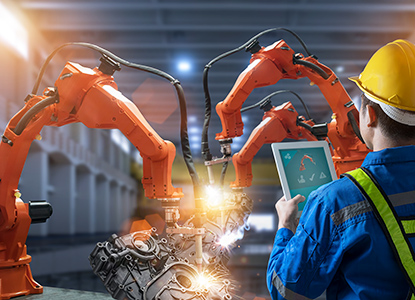
Advanced Robotic Welding Systems are transforming the manufacturing landscape by introducing unprecedented levels of speed, precision, and consistency to the production line. In industries such as automotive manufacturing, where thousands of identical welds are required daily on car chassis and components, manual welding simply cannot match the efficiency of robotics. These systems utilise articulated robotic arms equipped with specialised welding torches to perform complex welds with sub-millimetre accuracy. The automation eliminates human error, ensuring that every joint meets strict quality standards, which is vital for vehicle safety and structural durability. By integrating these systems, factories can operate continuously with minimal downtime, significantly boosting output capacities and meeting the high demands of both domestic and export markets.
Advanced Robotic Welding Systems also offer significant advantages in terms of material conservation and waste reduction. Robots are programmed to use the exact amount of filler material and shielding gas required for each weld, eliminating the overuse that is common in manual processes. This precision results in cleaner welds that require less post-process grinding or finishing, further saving time and labour costs. Furthermore, these systems are highly flexible; with the right programming, a single robotic cell can be adapted to weld different parts or switch between welding methods like MIG, TIG, or Spot welding. This adaptability allows manufacturers to respond quickly to design changes or new product lines without needing to invest in entirely new machinery. The software controlling these robots often includes simulation capabilities, allowing engineers to optimise the welding path offline before production begins.
Advanced Robotic Welding Systems play a crucial role in enhancing workplace safety by removing human operators from hazardous environments. Welding produces toxic fumes, intense UV radiation, and high heat, all of which pose health risks over long-term exposure. By delegating the actual welding task to robots, human workers can be moved to supervisory roles where they monitor the process from a safe distance or manage the programming and maintenance of the units. This shift not only improves health standards but also addresses the shortage of skilled manual welders in the industry. As technology advances, these systems are becoming more accessible to medium-sized enterprises, not just large conglomerates. With the integration of sensors and AI, robots can now detect joint variations in real-time and adjust their parameters instantly, paving the way for a smarter, more efficient future in manufacturing.