


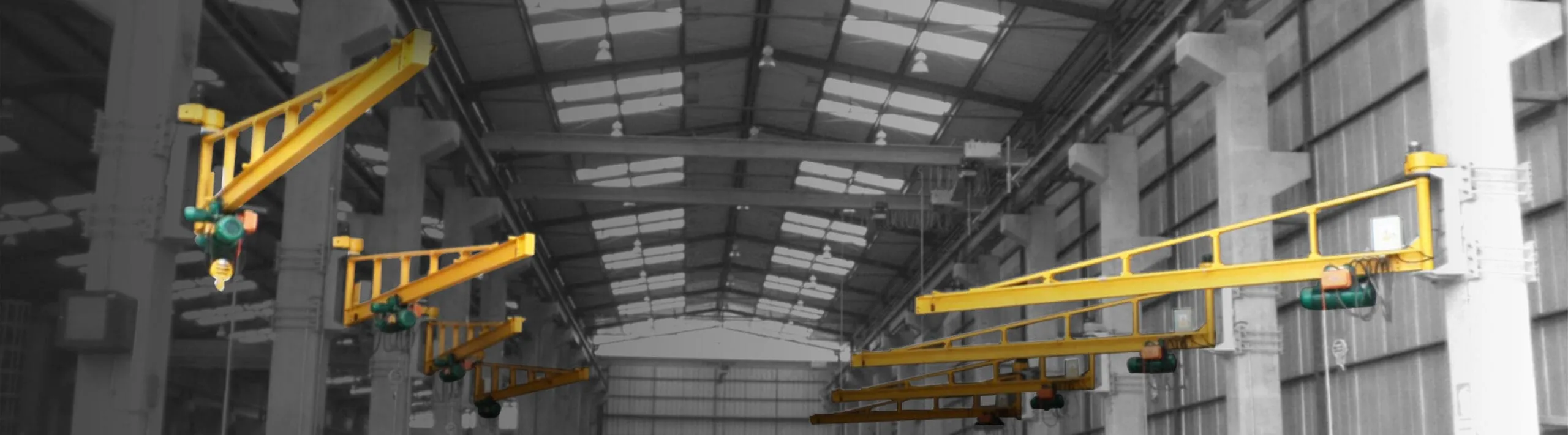
Wall Mounted Jib Crane systems are fundamentally transforming how factories and workshops manage their floor space and operational efficiency. These versatile lifting devices are designed to be installed directly onto existing building columns or walls which eliminates the need for any floor mounted pillars that might obstruct movement or take up valuable workspace. When a facility manager looks for reliable Material Handling Equipment to streamline workflow, this specific type of crane often tops the list because it utilizes the vertical structure of the building itself. There are generally two primary designs available in this category which include the tie rod style and the cantilever style. The Tie Rod Jib Crane is an economical solution that uses a tension rod to support the boom and it creates a triangular frame that is lightweight yet incredibly strong. On the other hand, the Cantilever Jib Crane offers the advantage of maximum headroom clearance because the boom is mounted perpendicular to the support column without any overhead obstruction. This specific design allows operators to lift loads closer to the ceiling, which is perfect for facilities with height restrictions. Both options provide excellent coverage for individual workstations and serve as a cost effective method to supplement larger overhead bridge cranes that might be busy handling heavier loads elsewhere in the plant. By installing these units at specific intervals along assembly lines, businesses can ensure that workers have immediate access to lifting assistance without waiting for a main plant crane.
Industrial Lifting Solutions like these wall mounted units are engineered to enhance productivity by reducing the physical strain on workers and speeding up repetitive handling tasks. One of the most significant features of these systems is their ability to cover a specific area effectively, often functioning as a 180 Degree Rotation Crane. This semi circular range of motion allows the boom to swing freely and cover a wide area along the wall or column, enabling the transfer of materials from one workbench to another with ease. To maximize the utility of the crane, it is almost always paired with a lifting device such as an Electric Hoist Crane. An electric hoist significantly increases the speed of vertical lifting and provides precise control for positioning heavy components, which is critical in assembly operations where accuracy is paramount. For lighter loads or applications where power is not readily available, a Manual Swing Jib can be utilized. This manual variation relies on the operator to push or pull the boom and is known for its smooth rotation and ergonomic benefits. The combination of an easy rotation mechanism and a powerful hoist creates a synergy that drastically reduces cycle times in production environments. Furthermore, the installation process for these cranes is relatively straightforward compared to freestanding units, as they do not require a massive concrete foundation, provided the existing building structure can support the applied forces and moment loads.
Heavy Duty Wall Crane models are constructed to withstand the rigors of continuous daily use in harsh environments such as steel mills, foundries, and busy logistics centers. When integrated into a comprehensive Warehouse Lifting System, these cranes facilitate the rapid movement of goods from pallets to conveyor belts or from storage areas to shipping zones. The robust design ensures that they can handle significant weight capacities while maintaining high safety standards for all personnel involved. Durability is a key factor, and manufacturers often use high grade steel and corrosion resistant finishes to ensure longevity. Regular maintenance of these systems is simple because all components are easily accessible from a ladder or a lift platform. Safety features often include rotation stops to prevent the boom from hitting obstructions and trolley stops to keep the hoist within safe limits. By investing in these durable lifting tools, companies can minimize downtime associated with equipment failure and protect their workforce from injuries related to manual lifting. The return on investment becomes evident very quickly as throughput increases and accident rates decrease. Ultimately, choosing the right wall-mounted system depends on analyzing the specific load requirements, the structural integrity of the facility walls, and the desired area of coverage, but the benefits of improved safety and efficiency are universal across all industries.
